
Many club games reach a moment when nothing is hanging, no forcing combination works, and both kings appear reasonably safe. These positions can feel harder than tactical ones because there is no obvious move demanding attention. A useful plan starts with reading the position rather than searching for a trick.
Begin with imbalances
Look for features that will not disappear after one move: a weak pawn, a bad bishop, an open file, a space advantage, or a square that one side can occupy more easily. These imbalances tell you where the game is likely to develop. If your opponent has an isolated pawn, for example, your plan may be to blockade it, exchange active pieces, and increase pressure slowly.
It also helps to identify your least useful piece. Improving that piece often gives the position a direction. A rook behind its own pawns may need an open file; a knight on the edge may need a route toward the center. Instead of asking “What is the best move?”, ask “Which piece most needs a better job?”
Test the plan against the opponent’s idea
A plan is only good if it survives contact with the other side. Before committing, ask what your opponent wants next. Sometimes your most important move is preventive: stopping a pawn break, denying a key square, or trading the piece that supports the opponent’s attack.
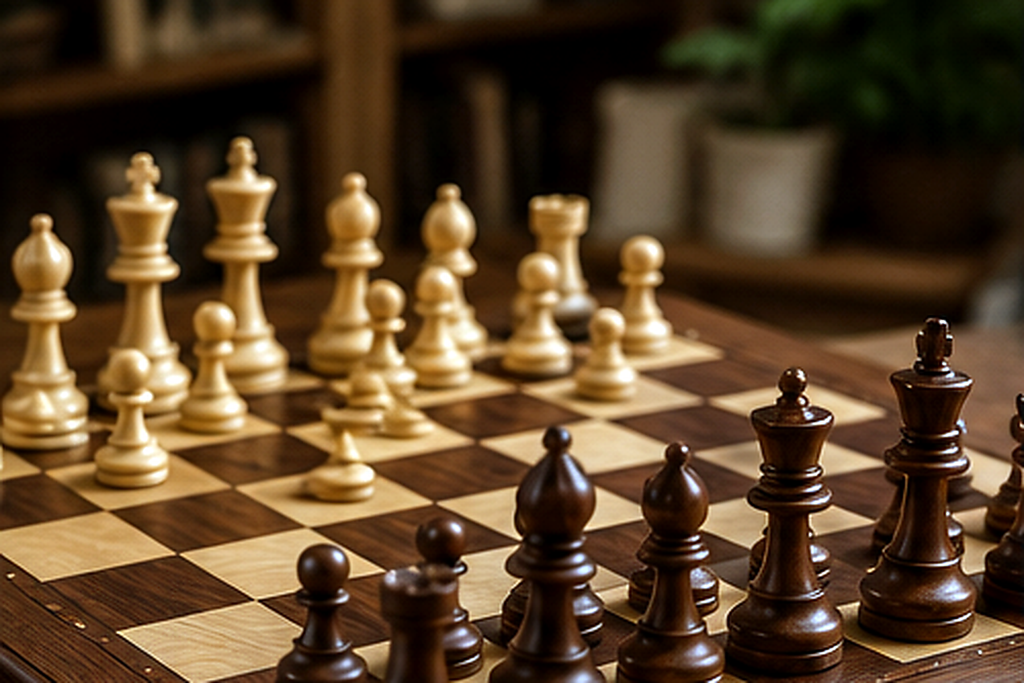
For study sessions, setting a quiet middlegame on a physical chess set can be useful because you can leave the position in place and return to it later. Try writing down two plans for each side before moving a piece. This trains you to see the position as a network of long-term ideas rather than a sequence of isolated moves.
A deeper way to train the same skill
The useful next step is to treat this subject as a sequence of decisions rather than as a slogan. The points about “Begin with imbalances” and “Test the plan against the opponent’s idea” reinforce each other: first you identify what the position is asking for, then you decide whether the resulting plan survives a tactical check. Players often reverse that order and calculate attractive moves before deciding what they are trying to achieve.
Positions of this type reward comparison more than absolute rules. A bishop may be ‘good’ in general and still be the piece you should exchange; an isolated pawn may be weak and still give useful space. The practical question is always what the feature does in this position. Evaluating function rather than labels keeps strategic thinking flexible.
To make the lesson durable, practice it under a modest time limit. Choose a position, allow yourself three minutes, and require a final decision with a short explanation. The goal is not to imitate tournament pressure perfectly; it is to prevent endless analysis. When time expires, commit, then review where the reasoning became unclear. That feedback is often more useful than whether the chosen move was the engine’s first line.
Strong positional play is rarely mysterious. It is the habit of noticing what matters, choosing a realistic improvement, and checking whether the opponent has a more urgent plan.