Calculation training becomes less useful when every exercise turns into a search for the computer’s top move. The goal is not to imitate an engine. It is to improve the way you choose candidates, visualize replies, and stop a line at a sensible point.
Choose positions with real decisions
Good calculation positions usually contain several plausible moves. If only one check exists, the exercise may test pattern recognition more than calculation. Middlegame positions with tactical tension are better because you must decide where to look first.
Before calculating, list two or three candidate moves. Include forcing ideas, but also one quieter move if the position calls for it. Then analyze one candidate at a time and always search for the opponent’s strongest reply, not the reply you hope to see.
Use a stopping rule
Players often waste effort by calculating far beyond the point where the position is already clear. Stop when the sequence reaches a quiet position that you can evaluate. Ask who has the safer king, better pieces, healthier pawns, and more active play. That final judgment is part of calculation too.
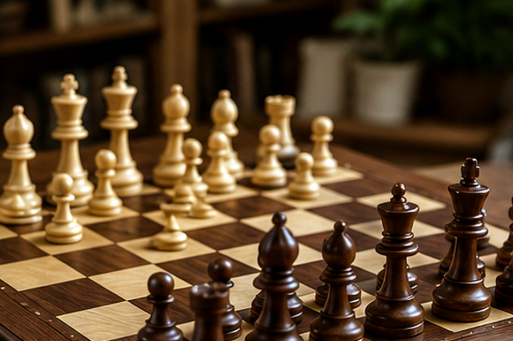
The best chess set for this kind of exercise is simply one that is easy to read and comfortable to use for repeated setup. Moving the pieces only after you finish a line can expose visualization errors that are hidden when a board updates automatically.
A deeper way to train the same skill
A practical way to deepen the lesson is to separate observation from action. Ideas such as “Choose positions with real decisions” and “Use a stopping rule” are most useful when you pause long enough to name the feature before searching for moves. Once the feature is clear, candidate moves become easier to compare and the calculation has a purpose instead of wandering through unrelated branches.
The method is especially valuable after an inaccuracy. Players often respond to one mistake by forcing the next move, as if they need to repair the game immediately. A better response is to re-read the position from scratch. The old plan may no longer be relevant, and the most accurate continuation can be a quiet move that restores coordination or limits counterplay.
After a few weeks, revisit the same positions without your old notes. If the correct questions come to mind quickly, the habit is becoming internal. If you still need to reread the explanation, keep the training set small rather than adding more material. Chess improvement is often faster when one idea becomes automatic before the next one is added.
Afterward, compare your work with an engine or annotations. Pay special attention to strong candidate moves you never considered. Missing the right move entirely is often a more important lesson than calculating one branch a move too short.