
Opposite-colored bishop endgames are the most drawish in chess: the defender often holds even two pawns down by building a blockade on the color its own bishop controls. Because the bishops can never challenge each other, the weaker side sets up a fortress the attacking bishop can never dislodge.
Knowing this changes how you evaluate trades and helps you both save lost positions and avoid throwing away won ones.

Why the Draws Happen
Each bishop controls only half the board’s squares, and with opposite-colored bishops those halves never overlap. The defender parks its king and pawns on the squares its bishop guards, and the attacker’s bishop is powerless to break in.
An extra pawn or even two often means nothing, because the defending bishop can shadow the passed pawns from a safe diagonal while the king blockades on the right color. The material count lies; the color of the squares tells the truth.
In opposite-colored bishop endings the defender blockades on the color of its own bishop, and the attacking bishop can never remove that blockade. This is why a clean extra pawn frequently draws.
The Blockade Defense
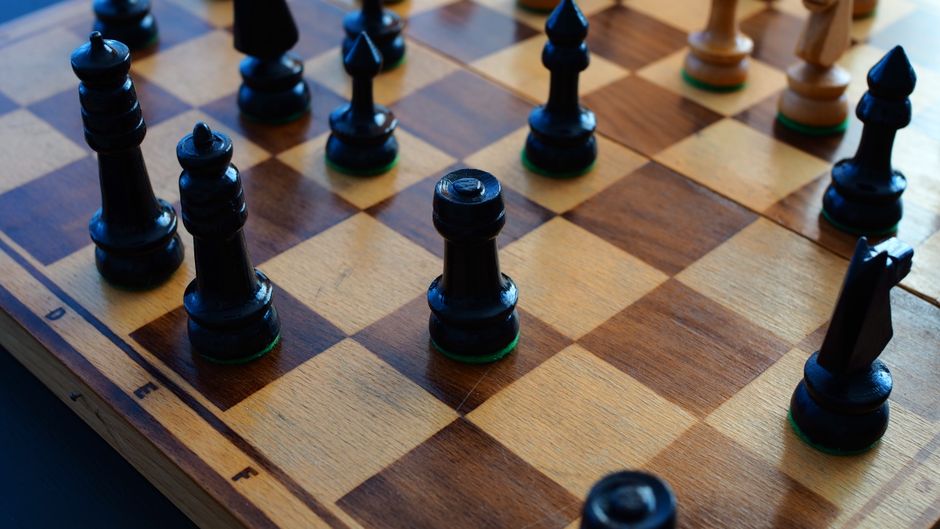
Defending is a matter of setting the blockade on the correct squares and then holding it. The king and bishop divide the work: one color each.
Follow this defensive plan:
- Identify the color your bishop controls and place your pawns and blockade on that color.
- Put your king in front of the enemy passed pawn on the square the enemy bishop cannot attack.
- Use your bishop to watch a second passed pawn from a distance along a safe diagonal.
- Shuffle and wait; the attacker has no way to make progress.
Because the defending king sits on a square the enemy bishop can never touch, the attacker cannot drive it away, and the fortress holds indefinitely.
Two connected passed pawns are far more dangerous than two separated ones. If your opponent’s extra pawns are next to each other, blockade them immediately before they can advance and split your defense apart.
When the Stronger Side Wins
Not every opposite-colored bishop ending is a draw. The attacker wins when the pawns are far apart and the defender cannot cover both fronts with one king and one bishop.
Two passed pawns separated by several files stretch the defense to breaking point. The king blockades one, but the bishop alone cannot both stop the other and stay safe, so eventually one pawn promotes.
| Pawn structure | Typical result | Reason |
|---|---|---|
| One extra pawn | Draw | Single blockade holds |
| Two connected passers | Often draw | King and bishop cover them |
| Two widely separated passers | Win for attacker | Defense stretched too far |
| Pawns on both wings | Win for attacker | Second front overwhelms |
The stronger side wins by creating a second, distant threat that the lone defending king and bishop cannot cover at the same time. Spread the play across the board rather than pushing on one square.
Attacking Technique
If you are a pawn or two up and want to win, do not rush the pawns forward into a blockade. Instead, probe on two wings and provoke weaknesses.
Advance your king actively, target the defender’s pawns on the color your bishop attacks, and only push your passed pawns once the defense is already stretched. Patience and a second front do far more than a single premature push, which usually just walks into the fortress.
The Role of the King
Because the bishops cannot fight each other, the kings carry an unusually large share of the battle in these endings. An active king can create a second front, support a passer, or attack the enemy pawns on squares the defending bishop cannot cover.
For the defender, the king does the heavy lifting of the blockade, sitting immovably on a square the enemy bishop can never attack. For the attacker, the king must penetrate to force the extra weakness that stretches the defense. In both roles, a passive king usually means the position drifts to a draw.
In opposite-colored bishop endings the king, not the bishop, is your most important piece, so activate it early and aggressively. Whoever uses the king better usually decides the game.
Middlegames With Opposite Bishops
The drawish reputation flips completely when many pieces remain on the board. With rooks or queens still present, opposite-colored bishops actually favor the attacker, because the extra bishop acts like an unopposed piece bearing down on one color around the enemy king.
This is one of the most important practical points to remember. The same bishop imbalance that draws in a pure ending can power a winning attack in the middlegame. When deciding whether to trade down, weigh which phase you are heading into, because opposite-colored bishops mean nearly opposite things in each.
| Phase | Opposite bishops favor | Reason |
|---|---|---|
| Pure bishop ending | The defender | Blockade cannot be broken |
| With rooks or queens | The attacker | Extra attacker on one color |
Using the Knowledge
The practical lesson arrives before the endgame does. When you are winning, avoid trading into an opposite-colored bishop ending unless your extra pawns are well separated; when you are losing, steer toward one because it is your best drawing chance.
Practice both roles from the board. Set up a two-pawn advantage with opposite-colored bishops and try to win as the stronger side and to hold as the defender, then repeat with the pawns on different files to feel how spacing changes the verdict. Notice how a fortress that holds with connected pawns collapses once the passers are pried apart. You will quickly learn that the color of the squares, not the raw material count, decides these fascinating endgames, and that lesson will reshape how you evaluate every trade that leads toward them. The defender should welcome them and the attacker should approach them with caution, and knowing which side of that line you stand on is half the battle.